Monday, March 13, 2023

A Tiny Addition to Malaysia's Butterfly Fauna: The Newly Recorded Species - Oriental Grass Jewel

A Tiny Addition to Malaysia's Butterfly Fauna: The Newly Recorded Species - Oriental Grass Jewel (Freyeria putli)


Over the past few decades, numerous butterfly species have been newly recorded in Malaysia. Among the most notable ones are:

Tawny Coster (Acraea terpsicore) - sighting by Simon Chan on 2002 at Petaling Jaya

Leopard Lacewing (Cethosia cyane) - Arshad et al., 2000 at Langkawi

Julia Heliconian (Dryas iulia) - sighthing by ButterflyCircle on 2009 at Langkawi


The latest addition:
Oriental Grass Jewel (Freyeria putli) - sighting by Chris Chapman on 2020

Background
The Oriental Grass Jewel butterfly species was not included in the early lists of Malaysia's butterfly fauna compiled by researchers and authors. This tiny species has a wingspan of 12-16mm, and during flight, it can be challenging to distinguish from the similarly sized Pygmy Grass Blue (Zizula hylax). As a result, this species may have been overlooked by many butterfly observers in the past.

Distribution
According to the latest records on iNaturalist (Mar 2023), the Oriental Grass Jewel butterfly species has a distribution range that extends from India to southern China, Thailand, Vietnam, and from there eastwards to Papua New Guinea and northern and eastern Australia.


Observation
During the observation of the Oriental Grass Jewel butterfly species at the Sg. Ara location in Penang, the host plant Indigofera hirsuta was discovered. Several Oriental Grass Jewel butterflies were observed flying around and laying eggs on the flower buds of this host plant.

Wingspan 12-16 mm.

Oriental Grass Jewel resting on the leaf of host plant


Host plant: Indigofera hirsuta

Host plant: Indigofera hirsuta


Flowers of Indigofera hirsuta

Flowers of Indigofera hirsuta


Seedpods of Indigofera hirsuta

Seed pods of Indigofera hirsuta


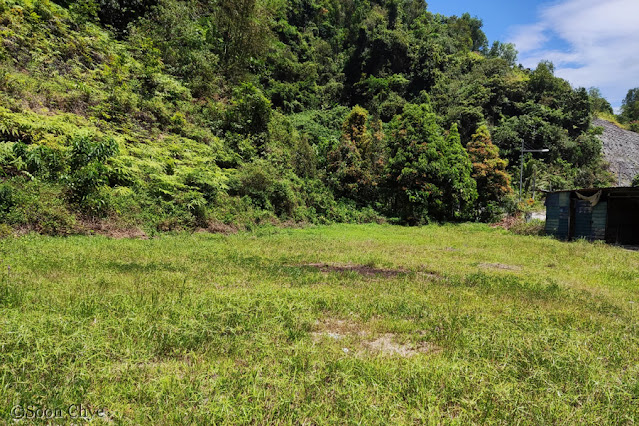
Open field habitat of Oriental Grass Jewel

Open field habitat of Oriental Grass Jewel


More photos:


Acknowledgement:
I would like to express my gratitude to Chris Chapman for his significant contribution to the discovery and dissemination of his findings on the Oriental Grass Jewel butterfly species located at Sg. Ara in Penang.

Reference:
A Photographic Monograph on Hong Kong Butterflies, Hong Kong Lepidopterists' Society

Butterflies of Thailand, 2nd Edition. Pisuth EK-AMNUAY

The Butterflies of the Malay Peninsula by A. Steven Corbet and H.M. Pendlebury (5th Edition).

Thursday, November 24, 2022

Selling of books - Life Histories of Asian Butterflies Vol. 1, 2 & 3 (50% discount)

Selling the following books on behalf of a friend.

Option 1: Both Vol 1 & 2, selling price: SGD 600.00 SGD 300.00

Option 2: All three books (Vol 1, 2 & 3), selling price: SGD 700.00 SGD 350

Whatsapp if interested: +65 nine742 43zero4


Ref (selling price at UK): 

Vol 1: https://www.pemberleybooks.com/product/the-life-histories-of-asian-butterflies.-vol.-1/3090/

Vol 2: https://www.pemberleybooks.com/product/the-life-histories-of-asian-butterflies.-vol.-2/1887/

Vol 3: https://www.pemberleybooks.com/product/sequel-to-the-life-histories-of-asian-butterflies.-vols-12/28286/

Sunday, October 16, 2022

Partial Life History of Narrow-banded Velvet Bob (Koruthaialos rubecula)

Partial Life History of Narrow-banded Velvet Bob (Koruthaialos rubecula)

A newly eclosed female of Narrow-banded Velvet Bob


Butterfly description:

The Narrow-banded Velvet Bob is common at all elevations in primary forest and forest fridge, in Peninsular Malaysia. It often shares the same habitats with K. sindu, which is the more abundant of the 2 species.  This species occurs from Assam to Sundaland and to Philippines.

Key to Identification:
K. rubecula (Narrow-banded Velvet Bob) - the orange-red discal band on forewing, often not reaching the costa edge.

K. sindu (Bright Red Velvet Bob) - the orange to orange-red discal band on forewing relatively narrow, its width not greater than the distance between the sub-apical edge of the band and the forewing apex.

Host plant: Calathea lutea  (to be confirm)

Host plant used by Narrow-banded Velvet Bob at N. Sembilan

Leaf cut out by caterpillar to build leaf folding shelter


Early stage:

Two caterpillars discovered on Calathea lutea (tbc) near to a forest fridge at Negeri Sembilan, Malaysia. A male and a female caterpillar are collected to rear, both are successfully emerged to a male and a female adult skipper.

5th instar caterpillar when found in the field


Two view of 5th instar caterpillar, including head capsule view


Two views of caterpillar in pre-pupa stage

Two views of the pupa 


Photo showing the length of palpi on the pupa


Adult skipper of Narrow-banded Velvet Bob


Adult skipper of Narrow-banded Velvet Bob


Specimens photo of male and female

Upperside and underside view of male specimen


Upperside and underside view of female specimen


Male Genitalia:

3 views of the inner-side of valve, same male specimen with slightly different angle (inc. left & right valve)

Koruthaialos rubecula - uncus


Illustration of male genitalia of Koruthaialos butleri and K. sindu from C&P 5


Illustration of male genitalia of K. rubecula and K. sindu from Y.Inayoshi:

K. rubecula rebecula (Phangnga, Thailand)


K. sindu sindu (Mae Hong Son, Thailand)


Reference:

  • C&P 5. The Butterflies of the Malay Peninsula, 5th Edition


Friday, August 19, 2022

Early stage of the Fulvous Pied Flat (Pseudocoladenia dan dhyana)

 Life History of Fulvous Pied Flat (Pseudocoladenia dan dhyana)

Female of Fulvous Pied Flat

Butterfly description:

Both wings are reddish brown above and below. Forewing has a dark submarginal fascia, and the hindwing is traversed by irregular lines composed of dark, diffuse patches. Male with two larger yellow hyaline spots at the end of the forewing cell, which are conjoined to form a single, outwardly, deeply indented spot facing the forewing edge, and there is a small spot above in space 11; there are larger spots in space 2 and 3, small sub-apical spots in space 6-8, and sometime a tiny spot in space 1b contiguous with spot in space 2. The female has much smaller spots and the lower cell spot may be absent.

Host plant description:

Cyathula prostrata - Hookweed (recorded in both Malaysia and Singapore)

Achyranthes aspera - Chaff Flower (recorded in Sulawesi)

Photo of host plants:

Host Plant: Cyathula prostrata
Close-up view of the host plant


Host plant flower and zoom-in view


Host plant from Tat Mok Waterfall, Phetchabun, Thailand


Early stage description:

The egg is dome-shaped with vertical line, yellowish white when freshly laid, and turn pinkish after 1 day. Egg is laid singly on the upperside of a leaf. The caterpillar eats just enough shell to emerge, and leave the remaining egg shell untouched. Egg is about 0.73-0.75 mm in diameter, and 17-19 longitudinal linear ridges.

Three views of the egg of Fulvous Pied Flat, empty shell on the right

Egg on the host plant

The 1st instar caterpillar has cylindrical-shaped body, with dorso-lateral reddish marking along each side of the body, and has a transverse black line behind the black shiny head capsule, short white satae found on the body. This stage take about 4 days.

1st instar, late stage

Leaf shelter of 1st instar Fulvous Pied Flat


The 2nd instar caterpillar has reduced dorso-lateral reddish marking along the each side of the body, this instar lasts about 4 days.
2nd instar caterpillar


The 3rd instar caterpillar looks similar in appearance as the 2nd instar caterpillar, the body now has distinctive white spots, and dorso-lateral line on each side of the body. This instar lasts about 5-6 days.

3rd instar caterpillar


The 4th instar caterpillar looks almost identical to the earlier instar, with visible different in term of size, and lighter brown of head capsule. This stage lasts about 6-7 days.

4th intar caterpillar
Leaf shelter of caterpillar in the field


The final (5th) instar caterpillar is similar to the earlier instar, with more distinctive dorso-lateral line on both side of body. The head capsule is purplish black. This instar last about 7 days.

5th instar caterpillar, side view of body and front head view

5th instar caterpillar. Male caterpillar on top, female at the bottom.

Side view of the late 5th instar caterpillar

2 views of a pre-pupatory stage caterpillar 

The pupa is light green, it has 1 small dark reddish brown projections on each side of the mesothorax. The pupa changed to amber-brown 2 days before pupation take place, and becomes almost dark brown 1 day before eclosion. Pupation takes place in the leaf shelter made by the last instar caterpillar.

2 view of a pupa of the Fulvous Pied Flat


2 view of the mature pupa (2 days before eclosion)


Special note:

1. There're several minor typo on the common name on some website - Fluvous Pied Flat.

2. Pisuth Ex-Amnuay didn't contribute to the book of The Butterflies of Hong Kong by M. J. Bascombe, G. Johnston and F.S. Bascombe

3. There's no record of the species in "The Butterflies of Hong Kong" book above. The species also not occurs in HK.


Reference:

  • The Butterflies of The Malay Peninsula, A.S. Corbet and H.M. Pendlebury, 4th Edition, Malayan Nature Society, 1992.
  • The Life Histories of Asian Butterflies Vol. 2 by Igarashi & Fukuda